Winner announced for World Autism Acceptance Month art competition
The winners of the North East Autism Society’s inaugural World Autism Acceptance Month art competition have been announced.
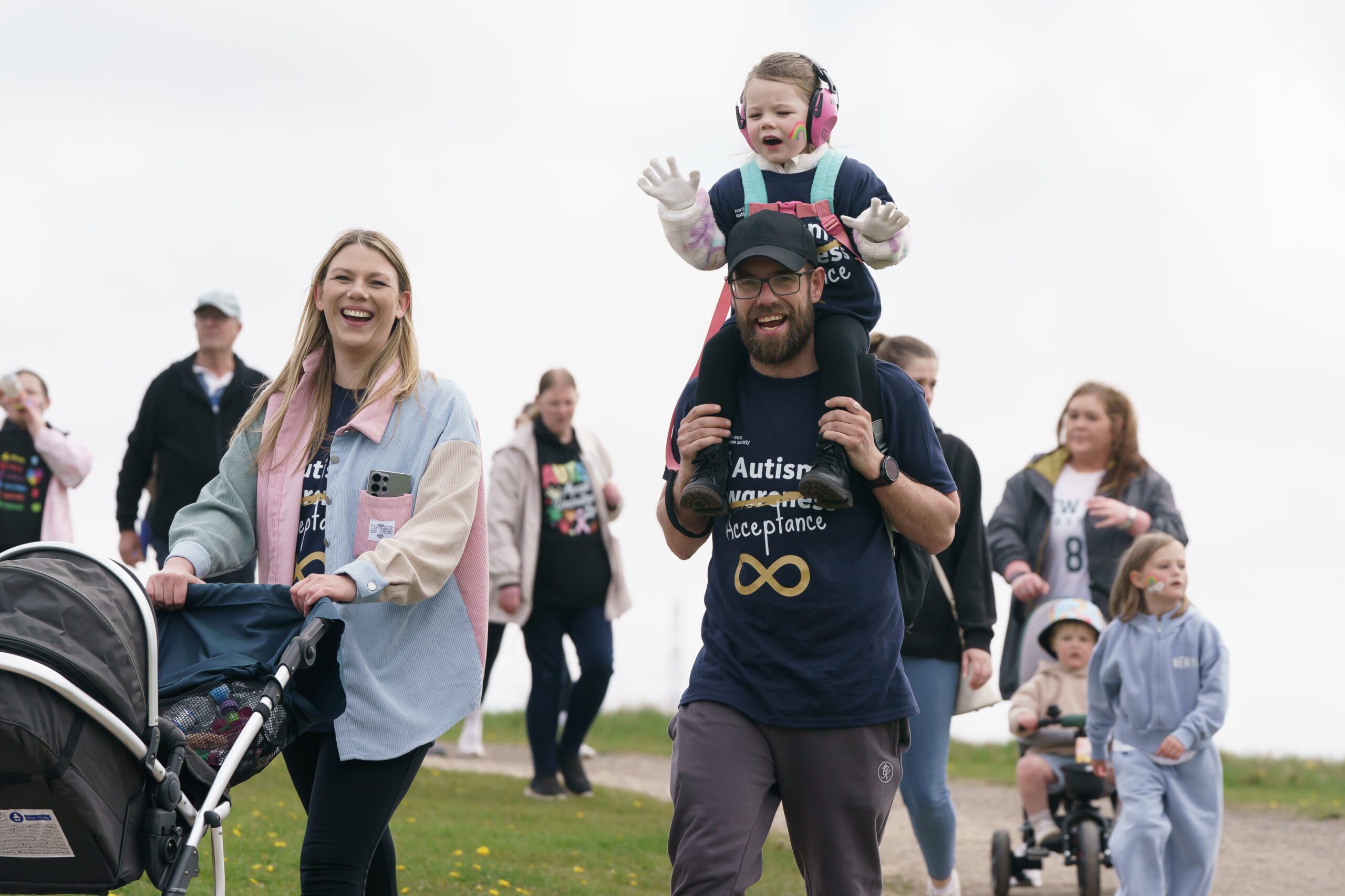
It’s World Autism Acceptance Month, and since the campaign started in 2007 there has been a lot more public discussion of autism and neurodivergence.
But some myths about autism just won’t go away. New ones have even cropped up, or been given a new lease of life, with debunked claims in the US about paracetamol and references to autism as a “disease” or an “epidemic”.
Such claims simply don’t match the facts and can cause real harm to autistic people, says the North East Autism Society (NEAS).
Kerrie Highcock, the charity’s family development manager, says: “Despite decades of research, and autistic people sharing their experiences daily, many misconceptions are still widely available.
“This false and sometimes dangerous information perpetuates the negative narrative that exists for autistic people and their families.”
So for Autism Acceptance Month, NEAS answers the questions that form around 10 of the most common autism myths.
No, and it doesn’t need to be. But even a brief search shows news of companies peddling outrageous and often dangerous “miracle cures”, with the US Food and Drug Administration (FDA) quietly removing a webpage warning people about dangerous products and therapies being baselessly used to “treat” autism.
If autism were a disease, maybe it could be cured. But as it’s the word used to describe a variation in human brain “wiring”, it can neither be removed or treated away.
We’re passionate about this one because believing something can be cured inherently means we think of it in negative terms, like it’s an abnormality.
Most autistic people we speak to see autism as a big part of their identity which shapes how they perceive the world around them. Rather than a “cure” for themselves, they’d prefer to see the focus on making society accessible to them.
There is no link between autism and vaccines – it has been disproved by study after study – but this health scare keeps on resurfacing, causing confusion and panic among parents.
The original research which suggested a link between the MMR vaccine and autism in 1998 has been thoroughly discredited and retracted.
Since then, high-quality research studies involving hundreds of thousands of people have shown that vaccinations do not cause autism.
But who can blame parents for panicking when the US health secretary, Robert F Kennedy Jr has been tasked with finding a “cause” for autism and conspiracy theories around vaccines continue to take hold, so sadly, this one isn’t likely to go away any time soon.
Autism is lifelong – people do not “grow out” of it. But it’s true that there is a lower rate of diagnosis among older people because of lower awareness and different diagnostic criteria in decades gone by (not because, as President Trump has claimed, “go back 25 years, autism was non-existent”).
It’s also true that media coverage and autism research has focused mainly on children. And you’ll often see resources for autistic people that appear to be very childlike – something which autistic adults can find patronising and infantilising.
But in reality, there are more autistic adults than children in the UK, and they need support. “If anything, it gets worse when you’re an adult, because there is less support and people expect more from you,” one autistic man tells us.
A lot of people still think this way. When people imagine a spectrum, they imagine a sliding scale from “severe” to “mild”. But it’s way, way more complicated than that.
Autistic people can have strong skill sets in some areas and need support in others. For example, someone might be very gifted academically and yet be unable to travel independently or live alone.
This is sometimes referred to as a “spiky profile” where there is a big difference in level of ability from one task to another. It means that you should never write off people’s strengths or underestimate their support needs. And no, you can’t tell by looking at someone.
It also varies according to context. People can have good days and bad days, or be able to speak eloquently in person but not on the telephone.
In short, no two people are the same. No two days are the same. Talk to people and don’t make judgments based on face value. Take some time to understand your own and others’ individual profile.
This remark may be meant kindly but it really irritates a lot of autistic people. It feels like you’re trivialising or dismissing their life experiences – many of which will have been difficult – and suggesting they should just try harder. It also feels like you’re invalidating their identity.
And if everyone was a bit autistic, surely society would work better for neurodivergent people and discrimination wouldn’t exist.
So no, not everyone is a little autistic. Burnout is not the same as feeling tired. And being sensitive to a sensory stimulus is not the same as overwhelm.
If you want to signal to an autistic person that they are not alone, talk to them about what they think and listen to their perspective.
Many parents will recognise this one. They are sometimes on edge when they go out to public places because of the judgment they feel from other people, who don’t necessarily understand autism.
A child who is having a meltdown might be going through sensory overload from noise, light, crowds, smells, or temperature. Or they might be overwhelmed by an unfamiliar environment or unexpected change to routine. Throw in any communication challenges that child might have, and what do you get? Something that with a cursory glance comes across as a naughty child.
So what is often perceived as naughty is a set of behaviours in response to changes in the environment. And it’s not caused by bad parenting either – research has proved that parenting is not to blame.
It’s true that autistic children can be naughty, but anyone could tell you that every child is naughty sometimes.
Many more boys and men have an autism diagnosis, but people of any gender can be autistic.
Initial studies of autism focused mainly on males, leading to the idea that it was a male “condition” and resulting in diagnostic bias. Also, girls “mask” their autism in a way deemed socially acceptable and less likely to be picked up.
However, we now know that many autistic girls and women were missed or misdiagnosed, and the gap is beginning to close. That’s helped by high-profile women including footballer Lucy Bronze, model Christine McGuinness and campaigner Greta Thunberg talking about being autistic.
Rain Man came out in 1988 but the idea that if you’re autistic you must be a maths-obsessed genius still has a lot to answer for. At the North East Autism Society, we are still asked sometimes what a particular person’s special skill is.
In reality, we all have strengths and weaknesses, and autistic people are no different.
Autism can come with intense interests or passions for certain subjects, but while these can provide a great deal of pleasure and can come in useful, they don’t necessarily equate to a “superpower”.
Value someone for who they actually are, not what you expect them to be.
The idea that autistic people can’t make friends is another tired old stereotype that should be retired.
The young people and adults we work with are only too keen to make friends, especially with other autistic people who “get them”. This can be described as finding your tribe. Friendships may look different, but this does not make them less valid.
Some might find social situations challenging, with their unspoken communication and social cues, but that doesn’t mean they don’t enjoy having relationships.
If any human being feels like they stand out they will invariably find “fitting in” harder. Which is why we are all about acceptance.
While it’s true that autistic people can and do face very real difficulties because of the way society is organised, autism is not a “disease”, “mental health issue” or “disorder”.
Autism is a different way of experiencing and interacting with the world, and autistic people often feel like it’s a fundamental part of their identity rather than something that’s “wrong” with them.
“I had a relative who wondered aloud where I might have ended up if I hadn’t been autistic, as if something had gone wrong. But I am not a defective version of somebody I could have been,” explained one young person.
Many of the problems autistic people face don’t come from them, but from societal expectations and being marginalised, invalidated or even ill-treated. The myths we talk about above – and many others – contribute to that discrimination.
So that’s why we still need World Autism Acceptance Month in April, to spread understanding and highlight the fact that neurodivergent people can bring a different perspective and a host of other skills and assets to the table if given the opportunity.