Independent review into mental health conditions, ADHD and autism: Our response
Our statement on the findings of the Government’s independent review into prevalence and support for mental health conditions, ADHD and autism.
IT has been referred to as a “hidden crisis” – the fact that autistic people are seven times more likely to die by suicide than non-autistic people.
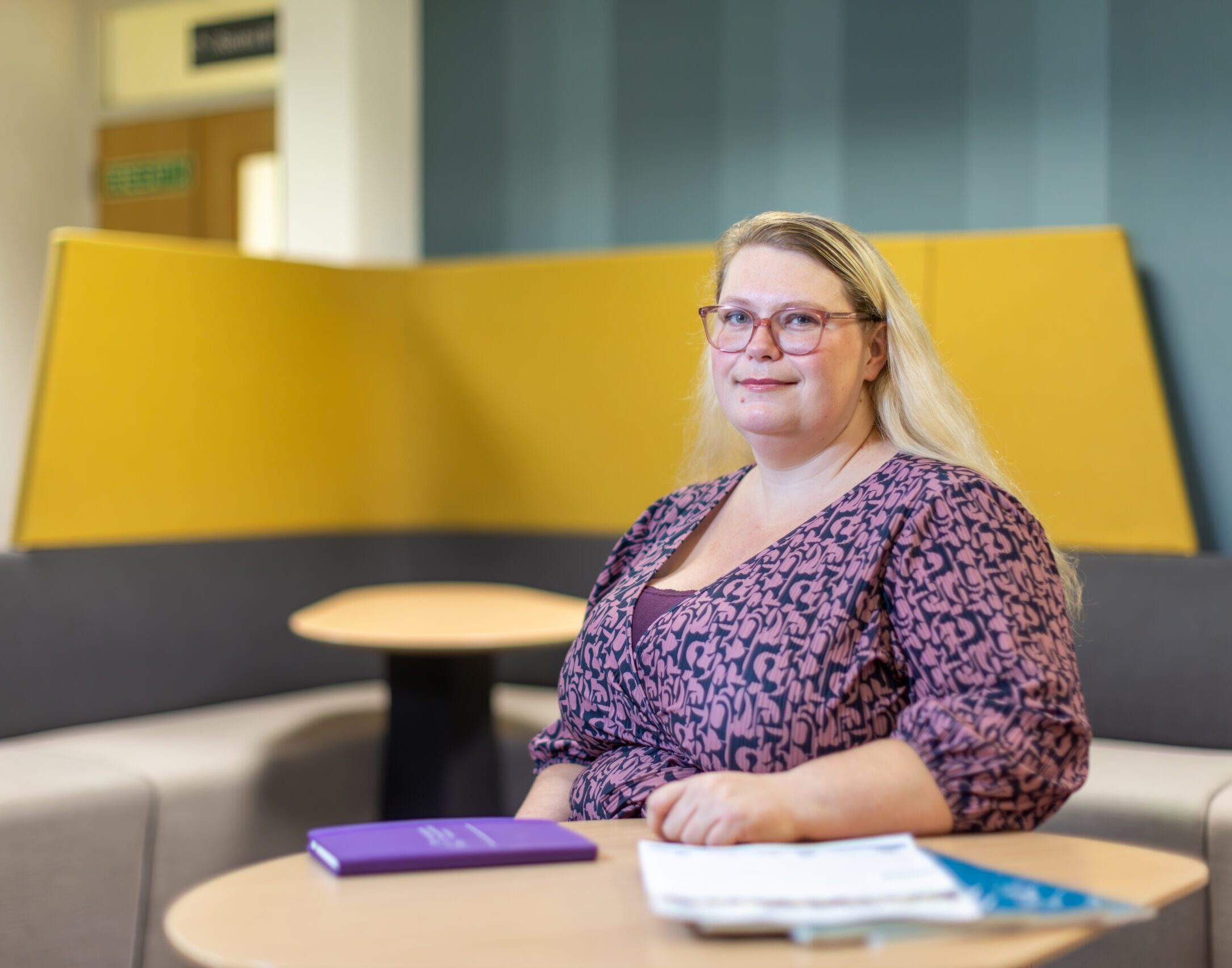
But it is something that researchers are determined to understand and change, thanks to pioneering work in the UK led by Sarah Cassidy at Nottingham University.
Sarah, Assistant Professor of Psychology, was the first to notice that autistic people were at higher risk of suicidal thoughts and behaviour when she was analysing data from a diagnostic clinic in Cambridge more than 10 years ago.
“We found that 66% of those late-diagnosed adults had contemplated suicide at some point in their life, and around 34% had planned or attempted suicide, which are really high numbers,” Sarah says.
“As part of the study I did a review of research that had been done in this area, and there was nothing. I was really shocked by that.”
For Sarah, the consequences were all too clear. Her own family had gone through agony when an autistic relative experienced mental health difficulties, self-harm and suicidal behaviour – but they couldn’t get professional help.
“Services said our family member was too complex and there weren’t staff trained to meet their needs, which was really devastating for us because we had nowhere to turn,” she says.
“So the study explained what our own experience had been. There was no research, no interventions, and services and clinicians who didn’t know what to do or how to support people.”
Sarah got funding to run the first study into suicidality in partnership with autistic adults, exploring what the risk factors were and what help was available. She has since gone on to run many more studies – all co-designed with autistic people – with the result that the Government’s latest Suicide Prevention Strategy has recognised autistic people as a high-risk group for the first time.
Below are some of their key findings:
For everyone, the risk of suicide is a complex mix of internal factors, environmental factors, and access to means – and it’s no different for autistic people. But some experiences and traits are unique to neurodivergent people, and some risk factors more acute.
Masking. “In our first study, autistic collaborators told me one of the biggest triggers for them was the pressure to put on an act and mask their autistic traits to get by in society. At the time, there was only one paper about that, so they found it validating that camouflaging had been recognised,” Sarah said.
Social pressures. “As well as trying to change your personality and behaviour, everything about yourself, to be accepted by others, you’re also trying to function in a society that’s not autism friendly or adapted to your needs,” Sarah explained.
Internal, autism-specific factors. “We know from research that autistic people are more likely to be perfectionist, for example, which can also be one thinking style that can increase suicidal thoughts. Some people might have rigid, inflexible thinking which can make it harder to problem-solve your way out of a difficult circumstance,” Sarah said.
External risk factors. “There are things we know are risk factors in the general population and autistic people might experience them more; they are more likely to be unemployed, to have poor experiences of education that isn’t tailored to their needs, to have lack of access to appropriate mental health support, and they might be more isolated and lonely,” Sarah said.
General models of suicidal thoughts and behaviours. These aren’t specific to autistic people, but include feeling lonely, disconnected, like you’re a burden on others, and trapped in an unbearable situation. Any of these things might be experienced by an autistic person, but in a different way to someone who is neurotypical, so the models may have to be adapted.

A lot of the autistic collaborators Sarah worked with echoed her family’s experience about getting turned down for professional help, something she wrote about in a paper called People Like Me Don’t Get Support.
“That was 10 years ago and sadly, in mental health, these things are still happening,” Sarah said. “Only very recently have autistic people been included in NHS guidance, but it’s just guidance, there’s no law to say you have to commission services to meet autistic people’s needs.
“So the progress is very, very slow, unfortunately. You’re left to get on with it.”
Autistic people say suicide prevention interventions adapted to their needs are a top research priority.
One thing that needs to change are the assessment tools used for mental health – for example the PHQ9 which is the standard questionnaire used to diagnose and measure depression.
It asks if you have experienced symptoms “half the days” or “nearly all the days”, but autistic people often find confusing and unspecific.
“When we did a study, people asked ‘what if it’s one day? Where does that go?’,” Sarah said.
"There wasn’t an answer that could capture their experience properly and that led to a lot of anxiety.”
Neither does the PHQ9 questionnaire take the autistic experience into account. It asks about difficulties with sleep, appetite and social withdrawal – all of which an autistic person might routinely experience without it having anything to do with depression.
Instead, an autistic person might find it more difficult to mask or cope with their sensory environment when they’re depressed, but that is not captured on the questionnaire.
“So it’s not just a problem of clarity, but of relevance,” Sarah said.
Support itself also needs to be adapted to autistic people. For example, Cognitive Behavioural Therapy – which aims to help people identify and change unhelpful thought patterns and behaviour – is difficult for someone who can’t identify their emotions.
“Many autistic people experience alexithymia, which is difficulty articulating and understanding their internal emotional experiences,” said Sarah. “So they might think ‘I don’t know how I feel on a typical day, let alone which situations cause difficult feelings’.
"And then they blame themselves for therapy not working, when actually they need more support with emotional literacy and scaffolding to engage with it.”
Likewise, safety plans that are prepared by someone at risk of self-harm or suicide to identify triggers and ways to keep themselves safe are difficult for autistic people to complete.
So Sarah and fellow researchers and collaborators have developed autism-adapted safety plans, with clearer instructions and more relevant examples. They are available to download on her online Mental Health in Autism site.
While suicidality is a very difficult topic, and the statistics for autistic people are shocking, Sarah and fellow researchers are positive about their work and the future.
When Sarah started out in 2014, it was just her; now, studies have skyrocketed. “There are big studies being funded and a real explosion of interest around the world, which is really great to see,” she said.
What’s more, researchers are positive and dedicated to saving lives. “Even though our topic is very difficult, it makes a real difference to people and has made into policy. It has changed the research direction and the funding available, so people can see the momentum.
“Whenever we have focus groups with autistic people, the discussions are always really positive, even if we are talking about difficult things, because we’re focused on solutions. It can help others and prevent what happened to us happening to our autistic children.”