

Dr Luke Beardon
Luke Beardon
Luke has worked for decades in the autism field, beginning as a volunteer at fourteen and progressing through roles including support worker, service developer, Regional Development Officer, Head of Training and Consultancy at the National Autistic Society, and Senior Lecturer in Autism at Sheffield Hallam University.
He has extensive experience developing residential, diagnostic, transition and community services, working strategically with Local Authorities, and providing national and international consultancy. Luke co-wrote the landmark ASPECT report (2007), has co-edited five books and authored eight influential titles on autism, and has published widely in academic journals.
His doctoral research explored autistic individuals in the Criminal Justice System, leading to several years as an expert witness. He has spoken at national and international conferences, addressed Parliament at Westminster and the United Nations in New York, and contributed to major media including the BBC, The Guardian, The Independent and The Times.
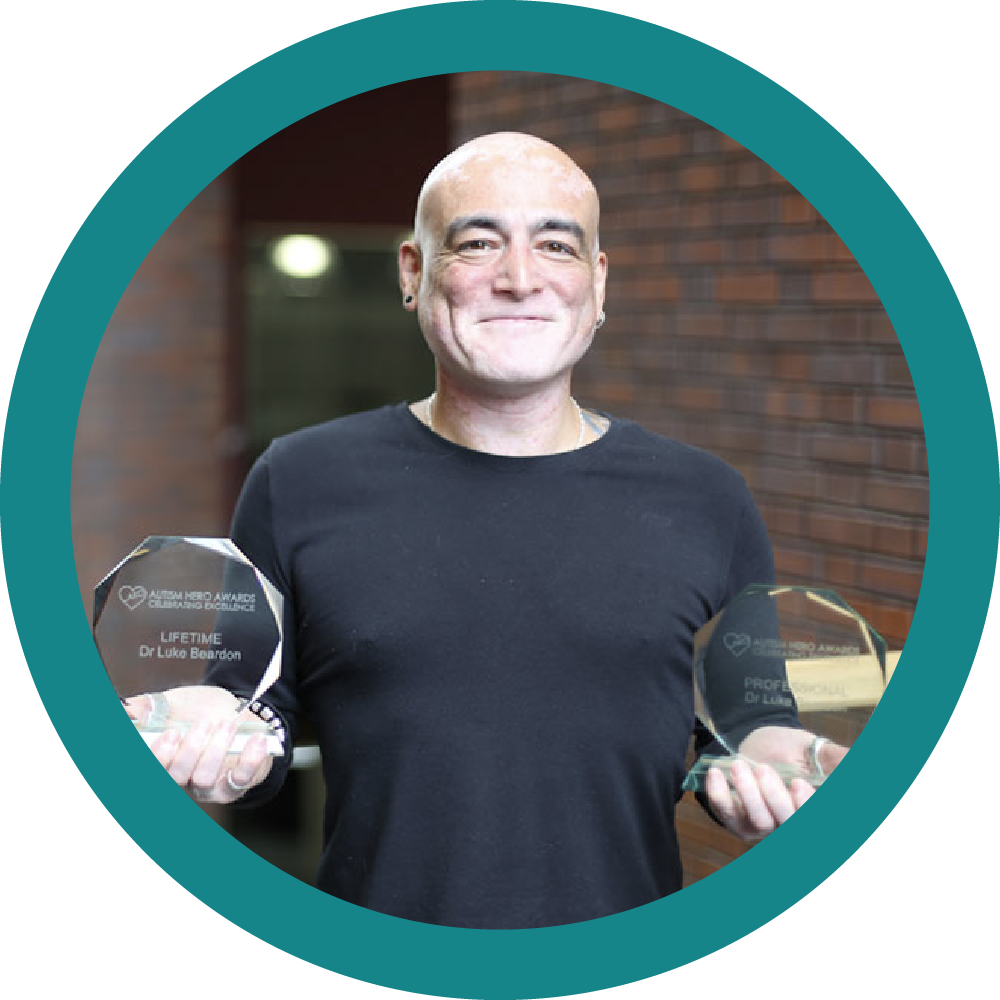
An award-winning educator and research supervisor, he has received multiple Inspirational Teacher and Supervisor awards, national professional honours, and Lifetime Achievement recognition, and continues to teach, research, supervise doctoral students, and champion good practice in autism.
Where has all the energy gone?
Accounting for energies, understanding them, & managing them to reduce risk of trauma.
Imagine you complete your first ever marathon. You’ve trained for months but you’re still exhausted. But you’ve done it. You have a well-deserved plate of chips and head to bed.
The very next day it dawns on you that there is every expectation that you leap out of bed - and run another marathon. When you question this everyone looks puzzled, and responds by saying ‘well, you did it yesterday so you must be able to do it today’ and you are forced into lacing your trainers up again, much to your utter distress.
This doesn’t happen to you. So why do we do a similar thing to so many of our neurodivergent children? In the talk Luke reflects on all the different types of energy expended by ND children (and adults), the dangers of expecting too much, and how to reduce risk of trauma by accounting for the energy balance required for well-being.