Life with Tourette syndrome ‘It’s not me – it’s Suzie’
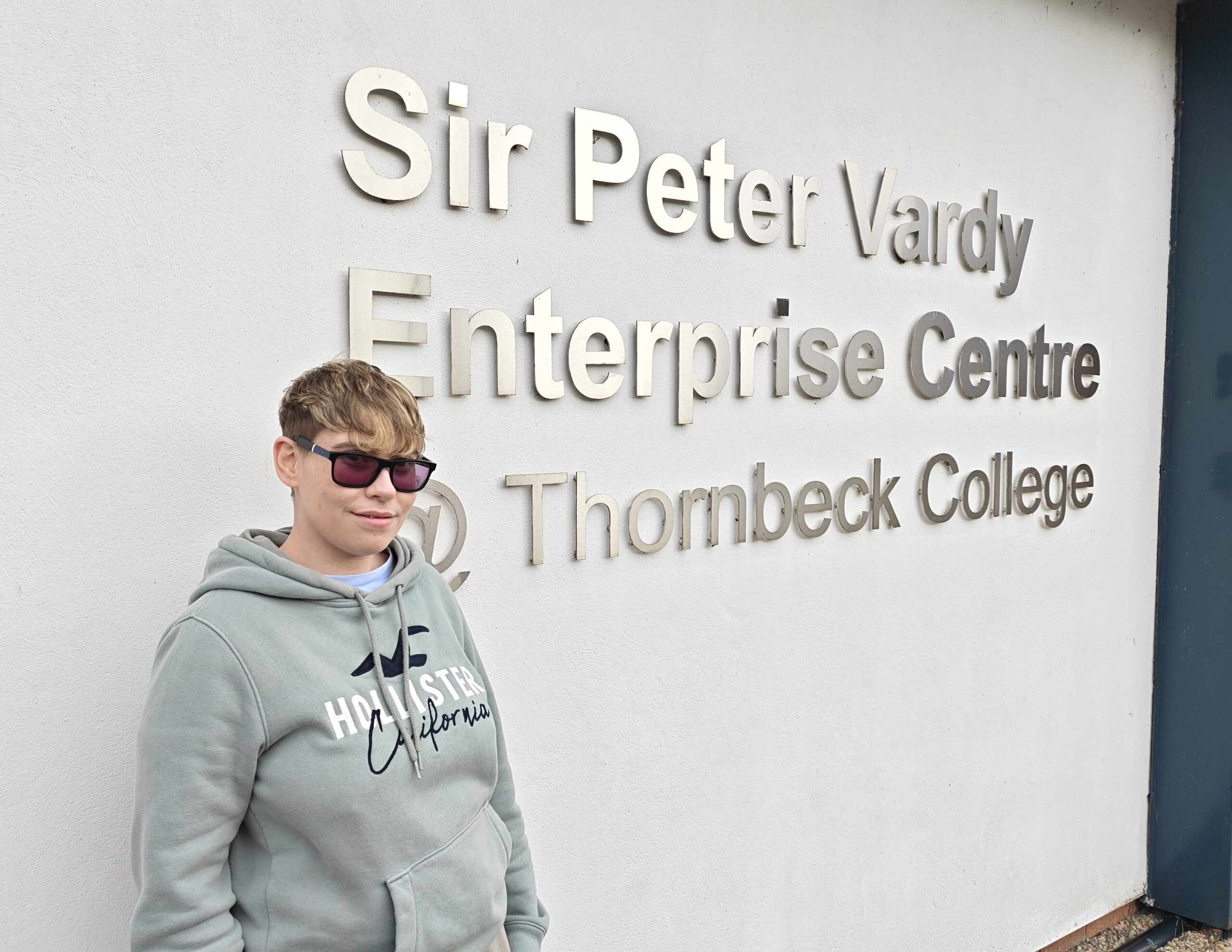
For Neurodiversity Celebration Week, Peter Barron talks to a young Thornbeck College learner about her life with Tourette syndrome.

At Thornbeck College, we believe that successful learning begins with regulation. By developing and utilising personalised support strategies, tailored to the unique sensory needs of each individual learner, we strive to support regulation as the foundation of engagement and progress.
We assess the sensory needs of each individual learner through careful observation and the completion of a sensory screening tool provided by our Occupational Therapist. This forms the basis of each learner’s sensory profile, which helps us understand their individual sensory processing and how they respond to sensory input. Regular reflection and review of individual profiles ensure that regulation strategies remain effective and responsive to changing needs.
Sensory processing refers to how the brain receives, organises and responds to input from the senses — including movement, touch, sound, body‑position, vision and internal cues. When a learner’s sensory system is dysregulated, it can manifest as restlessness, avoidance, distractibility or emotional overwhelm — all of which can block access to learning.
Based on individual sensory profiles, we integrate activities such as movement breaks, heavy‑work tasks (push/pull), tactile exploration, vestibular input (safe movement/rotation), deep pressure, or quiet sensory zones. These are scheduled into the daily timetable and embedded as purposeful sensory regulation activities, forming an appropriate “sensory diet”.
Each learner is supported to understand their sensory preferences and needs; what inputs help them feel alert, what inputs calm them, and what might overwhelm them. As learners build this understanding, they are empowered to contribute to and develop their own personalised support plans, fostering greater ownership of their wellbeing and learning journey. We use the Zones of Regulation framework to help learners identify their emotional and sensory states, giving them the tools to choose appropriate strategies for self-regulation. This supports their ability to independently manage their emotions, stay focused, and engage more successfully in learning and social situations.
When learners are regulated, they are more able to focus, self‑manage, transition smoothly and respond flexibly to teaching and learning.
At Thornbeck College we take a proactive and integrated approach. Staff are trained to be equipped to recognise signs of dysregulation, and to implement regulation strategies swiftly and sensitively. Our learning environments reflect sensory‑informed design, including access to movement‑friendly transitions, alternative seating, predictable routines and visual supports. This ensures that sensory regulation is built in, not an after‑thought. Embedding sensory regulation at Thornbeck means that we don’t wait for dysregulation or behaviour to be a barrier to learning — we anticipate, support and scaffold regulation so that access to learning becomes equal for all. When learners’ sensory needs are met, we unlock their capacity to engage, participate and thrive.